

Faint Line on a Pregnancy Test: Is It Positive or Not?
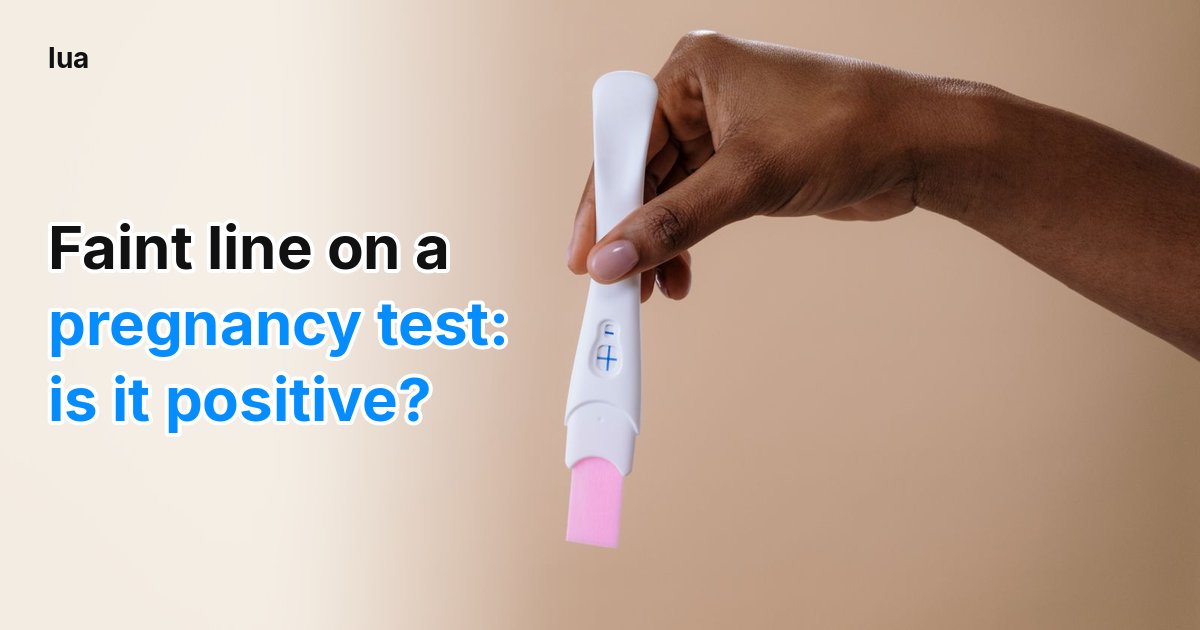
A faint line on a pregnancy test usually counts as a positive, as long as it shows up within the reading time in the instructions and has some color. Cleveland Clinic says even a faint line could mean you’re pregnant, and the NHS says a positive result is almost certainly correct.
The catch is the word “within”. A line that only appears after the test has dried can be an evaporation line, which doesn’t mean anything. So the real questions are when the line showed up, what it looks like, and what to do next. That’s what this post covers.
Is a faint line on a pregnancy test positive?
Usually, yes. Home tests react to hCG, a hormone your body makes once a fertilized egg has attached to the wall of the uterus. A faint line most often means the test found hCG but there isn’t much of it yet, which is common when you test early.
Two conditions matter:
- The control line is there. Cleveland Clinic says the control window shows you took the test correctly. No control line means the test didn’t work, whatever the other window shows.
- It appeared in time. Cleveland Clinic says most tests ask you to read the result before 10 minutes, and in most cases you’ll wait about three minutes. Your brand’s instructions give the exact window.
If both are true, treat the faint line as a likely positive and plan to confirm it.
Why is the line so faint?
Mostly because it’s early. The FDA says the amount of hCG rises very quickly in pregnancy, and that with a 28-day cycle hCG shows in urine about 12 to 15 days after ovulation. Cleveland Clinic says hCG levels usually double about every two days in the first few weeks. Test right at the edge of that and you get a pale line.
Other things that can make a line lighter:
- Diluted urine. The FDA says first-morning urine has more hCG in it than later in the day. Drinking a lot of water before testing can water the result down.
- The test itself. The FDA says tests vary in how well they pick up low levels of hCG.
- Reading it in poor light. A dim bathroom makes every line look fainter or less certain.
One more point that saves a lot of worry: the FDA describes home tests as qualitative, which means they tell you whether hCG is there, not how much. Line darkness is a rough hint, not a measurement.
Faint positive or evaporation line: how do you tell?
Cleveland Clinic says a faint line is different from an evaporation line. An evaporation line can appear if you check the result too late, once the urine has dried. Here’s how they usually compare:
| Faint positive | Evaporation line | |
|---|---|---|
| When it shows up | Within the reading time on the instructions | Often after the reading time, as the test dries |
| Color | Has some color, like the control line but lighter | Often gray or colorless, like a shadow |
| What it means | The test likely found hCG | Not a result. It doesn’t tell you anything |
| What to do | Confirm with another test in a couple of days, or see a doctor | Take a new test and read it on time |
If you only noticed the line an hour later, or the next morning after fishing the test out of the bin, don’t count it either way. Take a fresh test and set a timer.
If you’ve got a photo and still can’t decide, our pregnancy test line reader measures how dark the test line is compared with the control line. It runs in your browser and the photo stays on your phone. It isn’t a medical device and doesn’t replace your kit’s instructions.
Should the line get darker?
In a pregnancy that’s progressing, it usually does over a few days, because hCG keeps rising. The FDA says that if your first test was negative but you think you’re pregnant, you can test again after several days and may get a positive, since hCG increases so fast.
A practical way to check:
- Wait two days.
- Use the same brand, with first-morning urine if you can.
- Read it inside the time window, in good daylight.
- Compare the two, ideally photographed in the same light.
A darker line two days later points the right way. Don’t chase the shade every few hours, though. Brands, urine concentration and lighting change how a line looks, and line color can’t tell you how a pregnancy is going.
Faint line 2 days after a missed period: what now?
By then, a faint line is very likely a real positive. The NHS says most tests work from the first day of a missed period. The FDA says some pregnant women won’t see a positive on that first day, partly because periods can be irregular or due dates misjudged, and that the most reliable results come 1 to 2 weeks after a missed period. So a faint line two days after a missed period fits an early pregnancy where hCG is still building.
Next steps are simple: retest in a couple of days if you want reassurance, and contact your GP, midwife or doctor to confirm it. Cleveland Clinic says a blood test can pick up smaller amounts of hCG than a urine test.
If your test is negative and your period still hasn’t come, late period, negative pregnancy test explains what else can be going on. If you’re only a day or two late and haven’t tested yet, period 2 days late covers what’s normal.
Can a faint positive be wrong?
Rarely, but it can happen. Cleveland Clinic says a false positive is rare, and one reason is a chemical pregnancy. That’s a very early pregnancy loss in the first five weeks, where an embryo implants and then stops developing. It’s very common, and Cleveland Clinic says many people go through one without knowing, because it can happen around the time a period is due. A positive test followed by a negative one a few weeks later, and a period that’s heavier than usual, can be signs of it. Cleveland Clinic also says most people who have one go on to have healthy pregnancies.
Mayo Clinic says fertility medicines that contain hCG can also cause a false positive. The NHS says the hormones in the pill don’t stop a pregnancy test working, and Mayo Clinic says most medicines, including antibiotics and birth control pills, don’t change the result.
When to test, if you haven’t yet
Testing too early is the main reason for a false negative, according to Cleveland Clinic, and it’s also why so many first positives are faint. When to take a pregnancy test goes through the timing in detail: from the first day of a missed period, or at least 21 days after unprotected sex if you don’t know when your period is due.
When to see a doctor
- Any positive, faint or not. Contact your GP, midwife or doctor so they can confirm it and talk you through what comes next.
- A positive, then a negative, or bleeding after a positive. ACOG says bleeding is the most common sign of early pregnancy loss and to call your ob-gyn if you have spotting or bleeding, with or without pain. ACOG also says a small amount of bleeding early in pregnancy is common and doesn’t necessarily mean a miscarriage.
- Two negatives and still no period. The NHS says to speak to your GP if a second test is negative and your period hasn’t arrived.
- Get urgent advice (an urgent GP appointment or NHS 111 in the UK) if you have bleeding with pain anywhere in your tummy after a missed period or a positive test. The NHS says this can be a sign of an ectopic pregnancy.
FAQ
Is a faint line a positive pregnancy test?
Usually, yes, if it appeared within the reading time and has some color. Cleveland Clinic says even a faint line could mean you’re pregnant. Confirm it with another test or your doctor.
How do I know if it’s an evaporation line or a faint positive?
Check when it appeared. Cleveland Clinic says an evaporation line can show up if you read the test too late, once the urine has dried, and most tests should be read before 10 minutes. Gray lines that appear late don’t count.
Should a faint line get darker the next day?
Give it two days rather than one. hCG usually doubles about every two days early on, according to Cleveland Clinic, so the change from one day to the next can be hard to see.
Can a faint line still be positive 2 days after a missed period?
Yes. Early in pregnancy hCG can still be low, and the FDA says the most reliable results come 1 to 2 weeks after a missed period. Retest in a couple of days and contact your doctor.
What does a faint line then a negative mean?
It can mean the first line was read too late, or it can be a very early pregnancy loss, called a chemical pregnancy. Cleveland Clinic says these are very common. Talk to your doctor, especially if you’re bleeding.
How do you read a faint line properly?
Read it inside the time window, in daylight, and check the control line first. If you’ve saved a photo, the line reader can compare the test line with the control line.
Keep track of the dates that count
Lua: Period & Birth Control lets you log your periods and estimates when your next one is due, so you have a rough date for your first missed day before you test. If your test is positive, Lua has a pregnancy mode that follows your pregnancy week by week from your due date. It can’t tell you whether you’re pregnant, so a test is still how you find out, and your logs stay on your iPhone.
Sources
- NHS. Doing a pregnancy test (hCG, positive results almost certainly correct, the pill, first day of a missed period, when to see a GP).
- NHS. Vaginal bleeding between periods or after sex (ectopic pregnancy warning).
- Cleveland Clinic. Pregnancy tests (faint lines, evaporation lines, reading window, hCG doubling, false results, blood tests).
- Cleveland Clinic. Chemical pregnancy (what it is, how common, signs).
- FDA. Pregnancy home use tests (qualitative tests, hCG timing after ovulation, first-morning urine, retesting, accuracy after a missed period).
- Mayo Clinic. Home pregnancy tests: Can you trust the results? (fertility medicines and false positives, medicines that don’t affect results).
- ACOG. Early pregnancy loss (bleeding as a sign, when to call your ob-gyn).
More from the blog
One app for your cycle, contraception, fertility and pregnancy.
Private, flexible and designed to adapt with you.