Basal temperature tracker
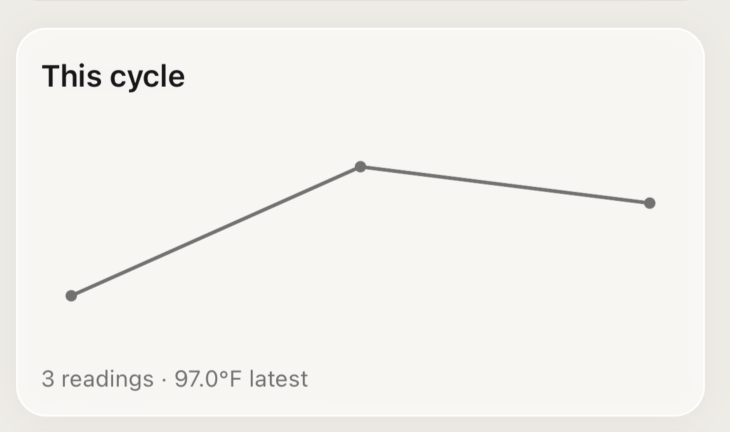
Log your waking temperature and see this cycle as a simple line, with a count of readings and the latest value.

Trying to conceive
You can get pregnant only a few days each cycle. Lua accurately determines these crucial fertile days helping you know when they will arrive.
Cycle timing plus the physical signs people actually use while trying.
Log your waking temperature and see this cycle as a simple line, with a count of readings and the latest value.
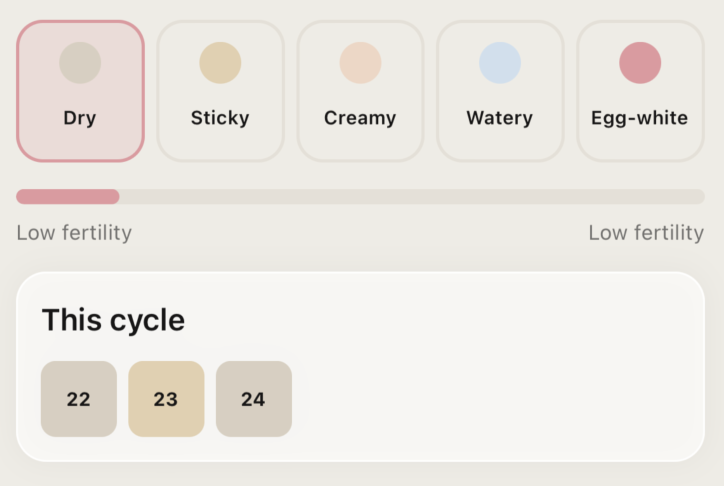
Tap dry, sticky, creamy, watery, or egg-white. Lua maps that to a fertility cue and keeps a color log for the cycle.
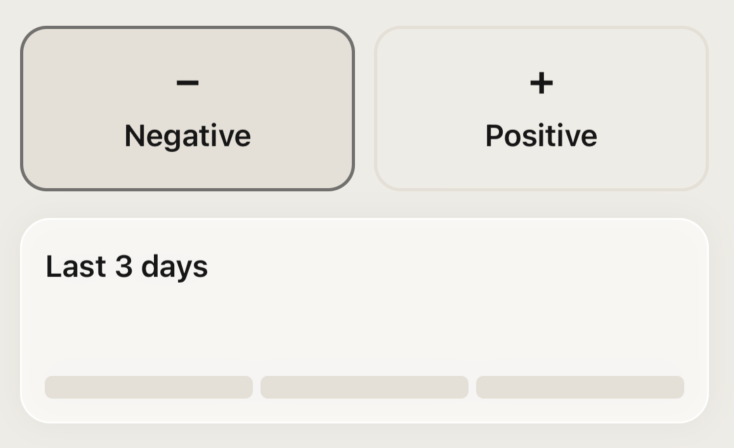
Log ovulation predictor kit results as negative or positive, and see the last few days at a glance.
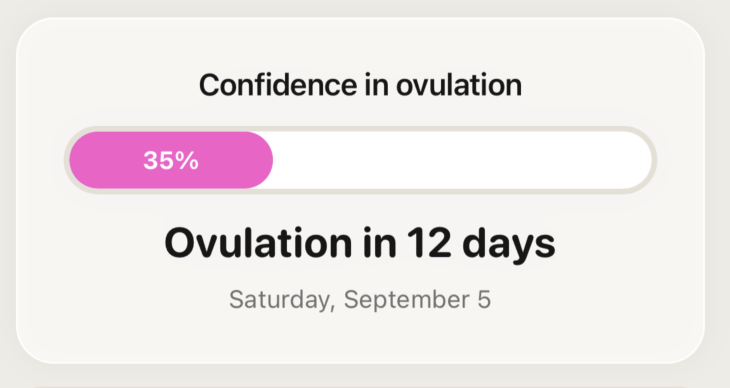
A percentage that shows how much support your logs give the estimate, plus a countdown to the likely day.
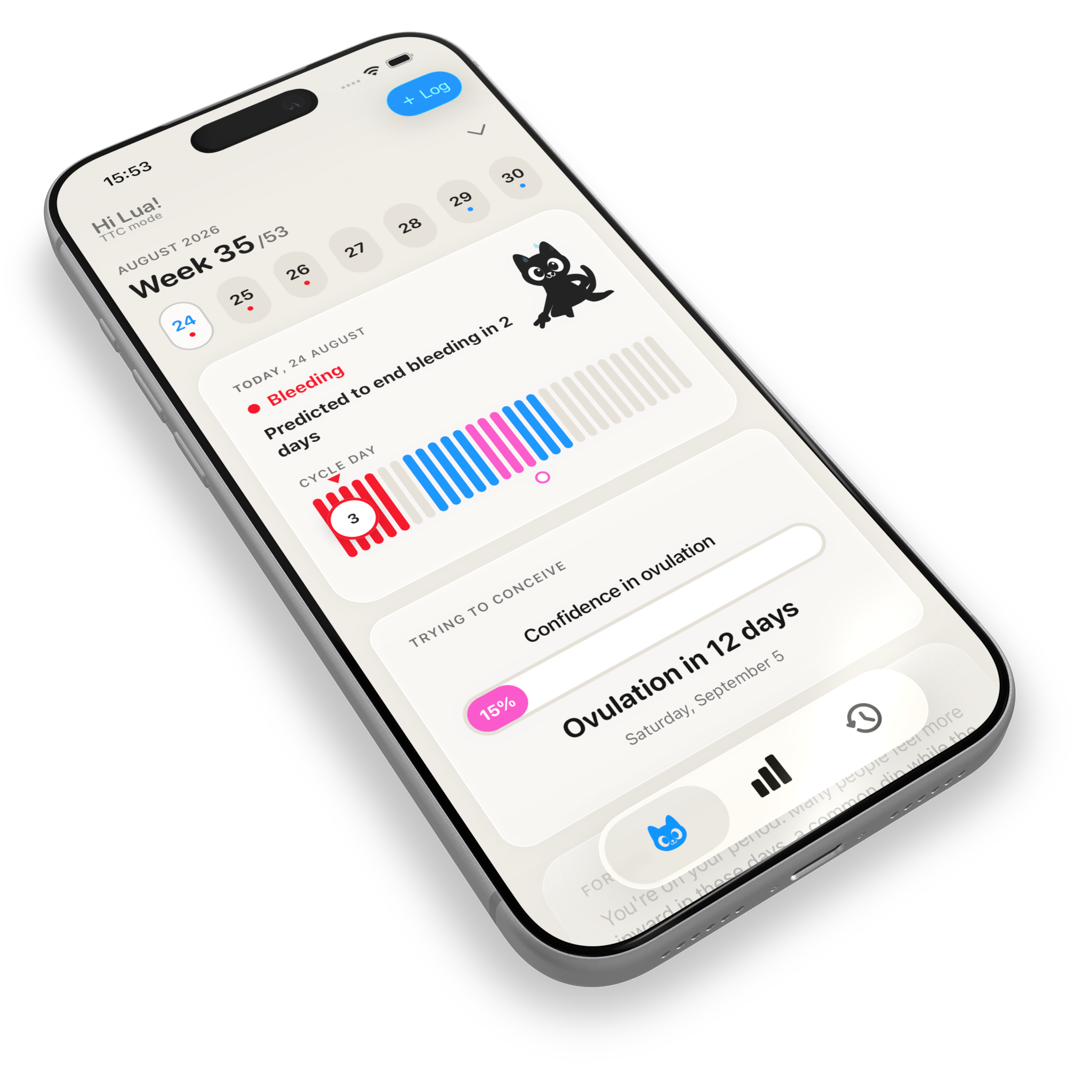
TTC mode keeps your usual cycle view and adds a Trying to Conceive card. You still see where you are today, including bleeding when it is happening. Under that, Lua shows confidence in ovulation, how many days until the likely date, and the weekday so you can plan around a window, not a single hour.
Predicted high-fertility days also show up on the week strip, next to period days. The estimate is built from your recent cycles, the same way Lua already guesses your next period. It is a window, not a guarantee.
Basal body temperature (BBT) is your temperature first thing, before you get up. After ovulation it often rises a little and stays up. That shift is a useful confirmation, not a crystal ball for the day before.
In Lua you log the reading for the day. This cycle shows as a small line with a few points, plus a line of context such as how many readings you have and the latest value. Enough to spot a shift. Not a chart you have to decode before breakfast.
Cervical mucus changes across the cycle. Dry or sticky usually means lower fertility. Creamy sits in the middle. Watery and egg-white are the stretchier types that often show up closer to ovulation.
Pick the type that matches what you notice. Lua fills a short fertility bar so dry sits toward low fertility and egg-white toward high, and it stamps that day’s color onto this cycle. You can look back at day 22, 23, 24 without opening a spreadsheet.
Ovulation predictor kits (OPKs) look for a luteinizing hormone (LH) surge. A positive test is one of the closer in-the-moment signals that ovulation may be near. A negative test is still useful. It tells you the surge has not shown up yet.
Log negative or positive for the day. Lua keeps a short strip of the last few days so a lone positive does not get lost, and a run of negatives stays easy to scan. No need to photograph strips or score faint lines if you do not want to.
Calendar math from past cycles is one input. Temperature shifts, mucus type, and OPK results are others. The confidence score is Lua’s way of saying how much of that picture you have filled in for this cycle. A low percentage early on, or when you have only cycle dates, is the honest answer. It can rise as more signs agree.
It is not a lab result and it is not a diagnosis. Lua does not promise ovulation on a given morning. It shows an estimate, how sure that estimate can reasonably be, and the logs you chose to keep. That is the point: more signal when you want it, without pretending the calendar knows more than it does. For a quick calendar-only sketch, try the ovulation calculator.
Real reviews from women using Lua.
Super intuitive and easy to use. I love how it easily shows me the history of my period symptoms and logs to easily spot patterns in my moods/energy. Highly recommend!
Mich13vdl
I have PCOS and this is helping me predict my cycle and ovulation window with a high level of accuracy. Really recommend it!
Swadref
Love that nobody’s taking my data!
kituuuuungggf
Lua is a practical and easy-to-use app for everyday life. The information is clear and easy to find, making it simple to see what matters most.
Tay Cándido
Best looking app I’ve found 🙏❤️❤️
Joanne24678
Private, flexible and designed to adapt with you.
The things people ask us most.
TTC mode keeps your usual cycle view and adds fertile-window estimates, likely ovulation timing, and a confidence score. You can also log basal temperature, cervical mucus, and OPK results for this cycle. It is the same private app, with extra tools for this chapter.
You can log basal body temperature as a waking reading, cervical mucus as dry, sticky, creamy, watery, or egg-white, and ovulation predictor kit results as negative or positive. None of it is required. Add the signs that help you, skip the rest.
The score reflects how much support your logs give the ovulation estimate this cycle. Cycle timing from your history is one input. A temperature shift, fertile-type mucus, and a positive OPK can add more. A low percentage means Lua does not have much confirming signal yet. It is an honesty meter, not a lab test.
No. Fertile days and ovulation timing are estimates from your cycle history, shown as a window rather than a single guaranteed date. Timing can shift with stress, illness, travel, or for no clear reason at all. Lua is not a contraceptive and does not diagnose fertility issues.
Yes. Temperature, mucus, OPK logs, and the confidence score are written to private storage on your phone, just like everything else in Lua. There is no server, no account, and no advertising.